Rhapsody of the Unseen- Nosbaum Reding Luxembourg

Every day we are confronted with new wars, new conflicts and new reasons to divide people from one another. We speak about nationality, race, religion and gender, yet less and less about what it means to be human.

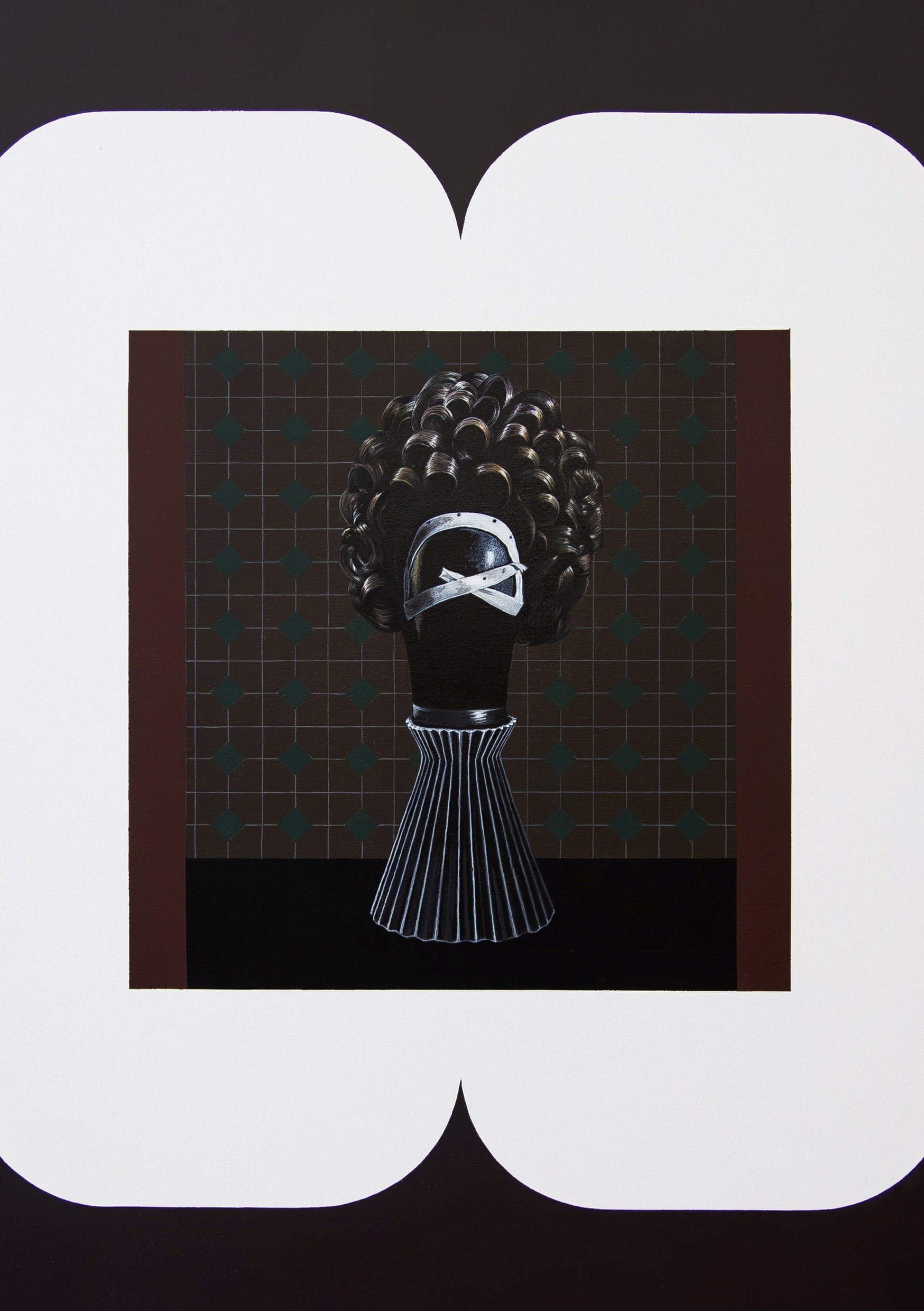
For me, art is never only about aesthetics. It is a way of slowing down the way we look at the world and at one another. Symbolism, allegory and ambiguity allow different meanings to exist at the same time, making it possible to approach challenging subjects without reducing them to simple statements. Art, for me, is not a therapeutic solution or an escape from these realities but another way of engaging with them.

This exhibition brings together three bodies of work, each approaching these questions from a different perspective. Together, they reflect on race, nationality, gender, identity, suppression, censorship and the social and political structures that shape the world around us. At the heart of all three projects lies the same question: Who we are as individuals and how we are treated as human beings. how much of who we are belongs to us, and how much has already been defined by the society? Are we as people free? And to what extent is our freedom constrained by the society in which we live?

I do not expect these paintings to provide answers. Instead, they offer a space for reflection—a space to look beyond familiar categories and reconsider the values and boundaries that continue to shape our lives. Through painting, I have the possibility to imagine and recreate what reality has failed to realise.
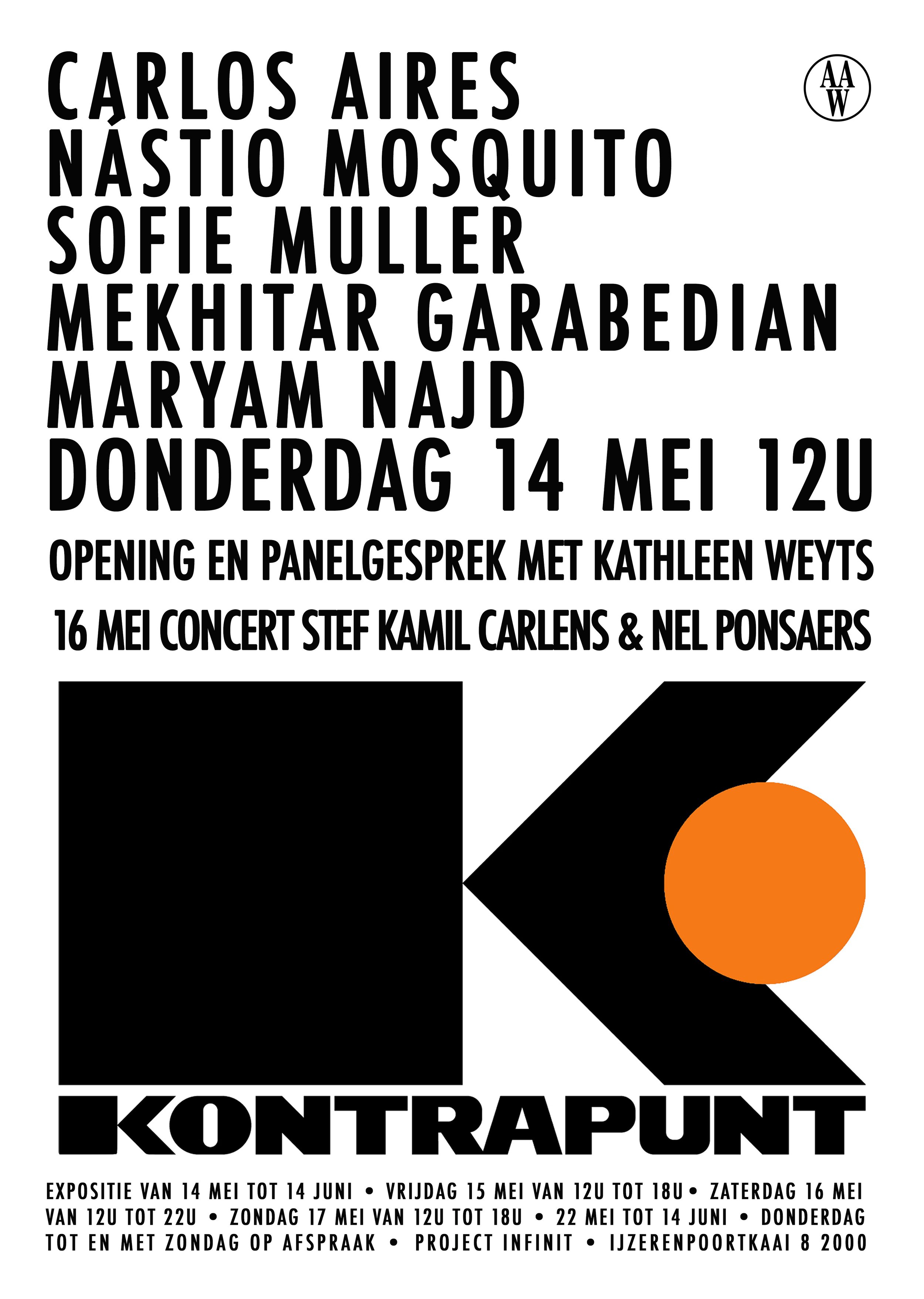
 

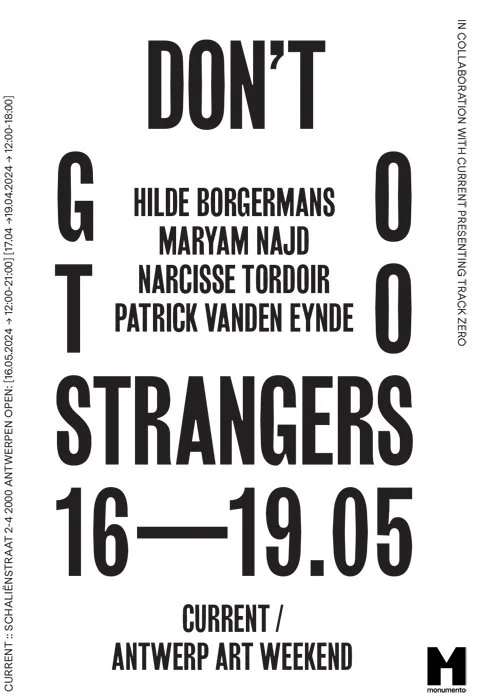
KONTRAPUNT — Edition III: The Politics of Visibility— Project Infinit— Antwerp Art Weekend— OFF Program — Curated by Maryam Najd

Kontrapunt is an ongoing curatorial project initiated in 2017, grounded in the concept of counterpoint as a way of working with difference rather than similarity. Instead of bringing together artistic practices that illustrate the same ideas or share a common aesthetic, the project deliberately places distinct and sometimes contrasting practices side by side. It does not aim to produce harmony or consensus; rather, it creates situations in which different artistic voices coexist, intersect, and challenge one another.

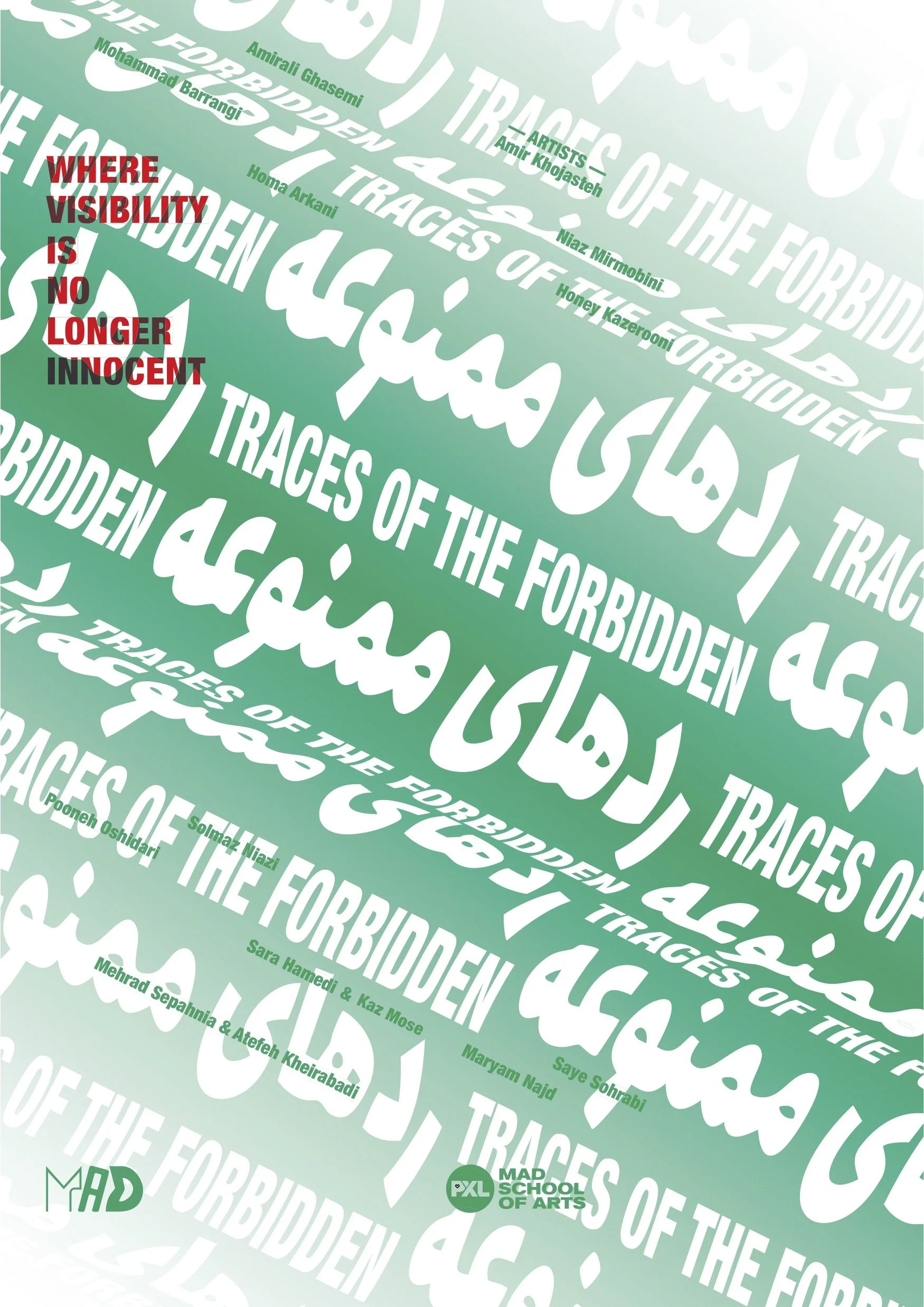
TRACES OF THE FORBIDDEN — Where Visibility Is No Longer Innocent — A Research-Based Exhibition Developed Within a Doctoral Project — Curated by Maryam Najd

Traces of the Forbidden is developed as part of a doctoral research project examining artistic censorship in the MENA region, with Iran serving as a focused case study. The exhibition functions not only as a presentation of artworks but also as a research platform through which artistic practices are explored in relation to censorship, suppression, and displacement.

ONTOMATERIA

Ontomateria refers to a form of matter inherently bound to the question of being. The term combines the Greek "ontos" (being) and the Latin "materia" (matter), designating not an inert substance but a dynamic, structured field through which existence is thought, experienced, and manifested. Rather than positing a separation between abstract thought and material conditions, ontomateria affirms that existence is always mediated by material forms, whether cognitive, symbolic, technological, or sensory. It describes a mode of matter that is both formative and reflective, capable of conditioning thought while being shaped by it in return.

As a philosophical construct, ontomateria challenges dualistic ontologies. It resists any notion of a pure, detached subjectivity or ideality, instead foregrounding the entanglement of existence with its material substrates. It suggests that to think the human condition is to think from and through matter, not only physical matter, but mental, linguistic, mnemonic, and systemic forms as well. Thus, ontomateria implies a model of subjectivity and world-formation grounded in material complexity, where matter is not merely a passive receiver of form but an active vector of ontological articulation.


This Is Not A Flag

Artwork On The Art Wall Of UZ Brussels

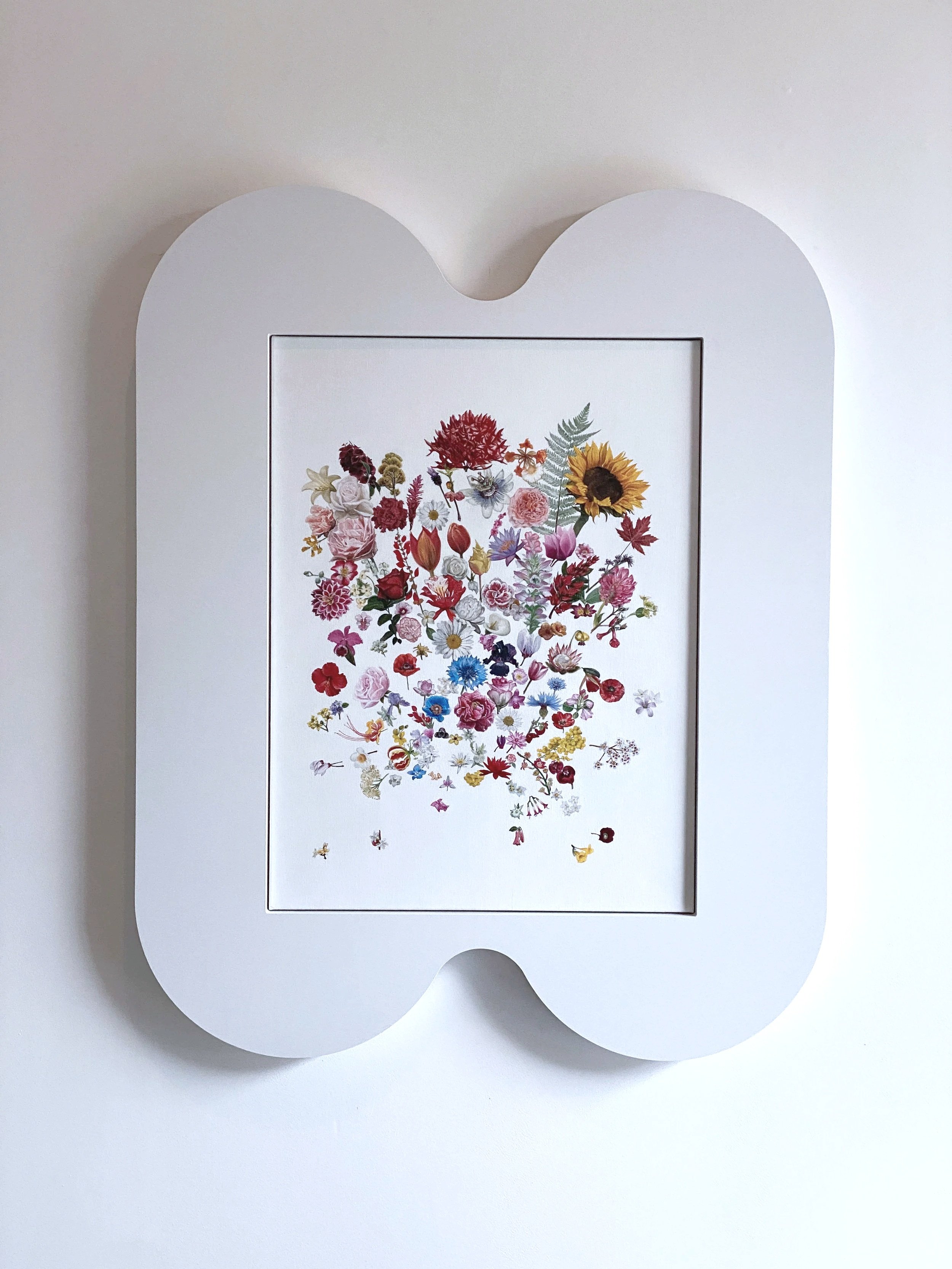
Until the end of June 2025, the artwork This is not a flag by artist Maryam Najd can be admired on the Art Wall in the entrance hall of the UZ Brussels Hospitalizations. This installation is part of her ongoing project, The Non-Existence Flag Project, and conveys a powerful message of unity that transcends borders and ideologies. The UZ Brussels showcases a different artwork on the art wall every three months.

Maryam Najd, who is of Iranian descent, draws upon her personal experiences as an immigrant in her work. She left her homeland years ago and has since frequently faced nationalistic judgments and prejudices, largely due to her Iranian nationality and the associated symbolism. These experiences have inspired her artistic quest for a world without borders.

Through the Non-Existence Flag Project, Najd explores how national flags—often charged symbols of power and ideology—can be reduced to abstract forms. She questions their significance and presents an alternative, peaceful vision in contrast.

"Flags are powerful signs of identity, but they can also incite polarization and conflict," the artist explains.

Flags as Color, Not as Borders

For this installation, Najd utilized the flags of 193 countries that are members of the United Nations, supplemented by a few observers such as Palestine, the Holy See, Taiwan, and Kosovo. The flags are displayed on 50 wooden panels, each arranged alphabetically with four countries per panel.

Each country was assigned a unique color, achieved by blending the original colors of the flags into a single hue, where color represents a vision of a boundless and harmonious world united in peace. This results in a new, abstract visual language in which the world is no longer divided by symbolism but united by color.

"With This is not a flag, UZ Brussel once again opts for an artwork that combines social engagement with aesthetics. The theme of connectedness and universal humanity closely aligns with the hospital's mission. UZ Brussel provides care without distinction and is there for everyone," said Luk Lambrecht, art curator of UZ Brussel.

About Maryam Najd

Maryam Najd is a Belgian-Iranian visual artist who lives and works in Antwerp. Her work is heavily influenced by her migration history and explores themes such as identity, gender, politics, and religion. Najd is known for her critical reflections on symbolism and power, often translated into abstract and conceptual art forms.

Il Cammino- Passio 2024

IL CAMINO- the fifth edition of biennale of kortrijk at Sint-Maartenskerk and St. Michielskerk from 15.02 to 07.04.2024

MONOCULTURE | A Recent History

MONOCULTURE | A Recent History- Curated by Nav Haq

25 September 2020 - 24 January 2021, Muhka, Antwerp

unnamed-1.jpg

The Clown Spirit- Curated by Jonna De Vos

16 October 2020- 27 December 2020, De Rossaert, Antwerp

Digital Invite (1).jpg

Beijing

BOTANIC- National Amalgamation project

I had the opportunity to hold an exhibition at the Arthur M. Sackler Museum of Art and Archaeology in Beijing. Read all about it in the article featured in studiointernational.com

_LIU0327 (1).jpg
_LIU0589.jpg
_LIU0062.jpg
_LIU0333.jpg

Kontrapunt #2

Kontrapunt is a project which accumulates a discussion about the issues that are not efficiently and widely used and recognized in every society.
“As we know there are many societies that cannot agree with the freedom of expression but here in Belgium and generally in Europe we have a better situation than the rest of the world. I would like to take a benefit of this position by organizing an exhibition, which shows to the public, the power of art in opposition to censorship and control. Freedom of expression is essential to the Arts. It needs to be actively sustained at the heart of the artistic practice and mission, or it risks being undermined and diminished by the conflict of interests. Throughout history works of art have been altered, silenced and even erased due to unacceptable content, whether the motivations for censorship were religious, social or political. Yet artists have long pushed boundaries of “offensive” through their imagery and content, presenting everything... Therefore, for the second edition of Kontrapunt, I would like to display the Artworks that ‘could be’ prohibited or banned not necessarily in Europe but other parts of the world.”

Screen Shot 2019-09-12 at 19.35.36.png

Participating artists: Anne-Mie Van Kerckhoven (BE), Danny
De Vos (BE), Christine Clinckx (BE), Charif Benhelima (BE/ MR), Mekhitar Garabedian (SY), Maryam Najd (IR).


( Click to enlarge images )

Today in De Standaard

Today "Mediterranean Blanket I" is mentioned in De Standaard. My work amongst others from female artists is acquired by Collection Flemish Community. Many tanks minister of culture Sven Gatz for your support!

51088793_10218070657499708_1895929002611179520_n.jpg

Dez Mona — Book of many

Golden Boy Under Fire.
This is the image of Gregory Frateur, frontman of the band Dezmona. I have created a piece of work front and back for their new album Book of Many to be released in February 2019.

This is the cover of the album. The original front and back painting is 80x60cm — oil on canvas.

Named after Othello's wife in Shakespeare's tragedy, Belgian outfit Dezmona combine jazz, gospel, classical, and French chansons to produce a sound that's been compared to the likes of Nina Simone, Anthony & the Johnsons and Tom Waits. Formed in 2003 by vocalist Gregory Frateur and Nicolas Rombouts. 
http://www.dezmona.com

51518382_3786164488068366_4675944956878127104_n.jpg